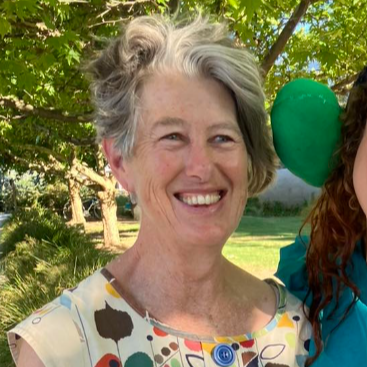
Julie Armstrong
A voice for pollinators
Julie Armstrong became the 2023 National Environmental Educator of the Year, for her work for ACT for Bees & Other Pollinators, the organisation she founded in 2014 and now leads. This focuses on teaching children, families, and communities why pollinators matter for the food on our plates and the health of our ecosystems. Her work has helped thousands of young people understand their place in the natural world, and how even small actions can protect the species we rely on every day.
SEE Change: How did you first get into working with bees and pollinators?
I first became interested in bees while visiting the Findhorn Foundation in Scotland in 2012, where they held weekly meditations for nature and for the bees. At the time, Europe was facing a severe decline in bee populations due to neonicotinoid pesticides, which affect bees’ navigation, reproduction, and ultimately, caused hive collapse.
When I came back to Australia, I started to listen out for bees, to look out for where they were. And I really was quite shocked by how few I could find. I went to Newcastle, the South Coast, and Sydney and kept hearing the same thing. Gardens weren’t being pollinated, beekeepers were shutting down, and in some places, people said they didn’t even see a bee.
This concern connected with Rudolf Steiner’s early warnings about the industrialisation of beekeeping. He predicted that within a century, bees could face serious decline if humans continued to intervene unnaturally in their biology.
The crisis in Europe, the silence in Australia, and Steiner’s long-ago predictions came together and pushed me to act. I realized that bees were disappearing and no one was talking about it. That’s what sparked my work with pollinators and ACT for Bees was founded in Feb 2014.
You’ve worked a lot with schools and young children. What kinds of ideas about bees seem to really stick with them?
What I’ve found, working with children over many years, is that the ideas that truly stay with them are the ones they experience, not just the ones they’re told. When I was working with a group of students called the Stars of Hope, they were the ones who stepped forward and said “We want to learn about bees”. And once they took ownership of it, everything changed. They made puppet plays, PowerPoints, little skits and performances — all to teach other children why bees matter.
And what really stuck with them was the simple realisation that bees are connected to their food. Many teachers and students didn’t know that pollination is what allows plants to produce fruit and seeds, and it wasn’t even in the national curriculum that food and bees were connected. Once children understood that, it became personal. They could see the chain that flowed from bees to the food that went into their own lunchboxes.
Another thing that stays with them is the sense of empowerment. Children today hear so much about climate change and disaster that it can feel overwhelming. But when they learn that planting flowers, caring for soil, or supporting farmers who look after biodiversity actually makes a difference, you can see their relief and excitement.
And finally the joy of being in nature itself stays with them. Steiner education has always emphasized daily connection with the outdoors, and when children spend time observing flowers, insects, and seasons, they naturally start to care. They notice when something is missing. They notice when something is thriving. That awareness becomes part of them.
If someone wanted to help pollinators at home or in their neighbourhood, what are a few simple things they could realistically do?
What I always tell people is that helping pollinators doesn’t have to be grand or complicated. It really begins with planting, and planting a lot. Bees need food throughout the year, and different plants offer different kinds of medicine for them. In our own garden, we have sacred basil at the moment, and it’s absolutely covered in honeybees. Herbs in general are wonderful for this. If you’ve got a balcony, you can still grow things like spearmint, lemon balm, rosemary, lavender, or the salvias that blue-banded bees adore. Just letting herbs flower is already a gift to pollinators. Planting natives is important for our native bees.
The second thing is avoiding pesticides. We don't know what's going in our plants when we buy them, right. Unless you buy the certified organic ones. So if one of your plants gets munched, it doesn’t always mean you need to spray. It might juts mean the plant is stressed, or the soil isn’t quite right. Soil health is everything. Compost, moisture, sunlight. Those basics matter far more than chemicals.
What surprised you about the way people and nature kind of connect together?
We are nature. I think many people grow up imagining there’s a line between us and the environment, but when you really pay attention, you realise there’s a constant exchange happening every moment. We breathe in the air that trees have made for us, and they breathe in what we exhale. We eat food grown from the soil, and that food literally becomes our bodies. Water flows through us just as it flows through rivers. Even the warmth in our bodies mirrors the warmth that bees maintain inside their hives.
Once you see that, the relationship between people and nature stops being abstract. It becomes intimate. And what surprises me still is how unconscious most of us are of that connection, even though it’s happening all the time.
What also stays with me is how deeply people respond when they do reconnect. When someone starts tending a garden, or planting for bees, or simply noticing the seasons, something softens. There’s a sense of custodianship that emerges, this feeling of “I’m here for a while, and I can take care of this place”. And that’s really at the heart of ACT for Bees: reminding people that small, everyday actions matter. Planting a few flowers, being grateful for the food on your plate, noticing the water and sunlight that made it possible. These are all ways of coming back into relationship.
And when we stay conscious of that relationship, even in small moments, it changes how we move through the world. It becomes less about the drama of environmental crises and more about presence, gratitude, and the quiet belief that we can help. That’s what has stayed with me the most.