
Rebecca Blackburn
The science of minimalism
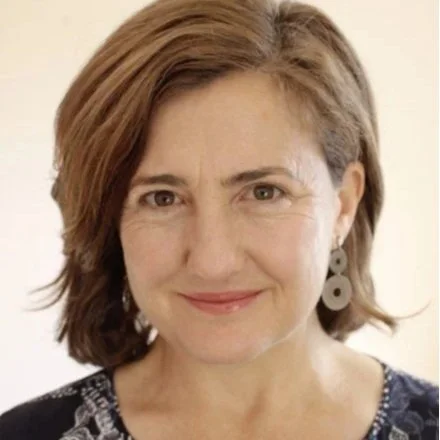
Minimalism is often framed as an aesthetic trend — clean lines, white walls, and curated shelves. But for Rebecca Blackburn, a PhD candidate in Psychology at the Australian National University, minimalism is far more than a visual style. It is a behavioural shift with real implications for wellbeing and the climate crisis.
With a Master of Environmental Science and Technology from UNSW and a career spanning environmental management and science writing, Rebecca has spent years exploring how everyday choices shape planetary health. She is the author of Green is Good – Smart Ways to Live Well and Help the Planet, and her research has examined everything from household environmental impacts to the global consequences of overconsumption.
A recipient of the Game Change Fund Supporting Climate Change Research scholarship and a 2024 Planetary Health Equity Hothouse Future Leader Fellow, Rebecca’s work focuses on the psychology of low‑consumption lifestyles. Her recent publications asked bold questions: Can minimalism reduce carbon footprints? Why do the wealthy consume so much more? And what does it take for people to shift from high‑impact habits to more intentional living?
In this interview, she discusses the motivations behind minimalism, the misconceptions surrounding it, and what her research reveals about the relationship between consumption, wellbeing, and climate action.
SEE Change: What first sparked your interest in studying minimalism and the low consumption lifestyles?
Rebecca: It was probably about 15 years ago. I read Bea Johnson, and she had a blog called Zero Waste Home. The focus was on reducing your waste. She didn't actually call it minimalism, but she was living a very minimal life, so she pared back everything to the basics.
She lived in a Western home with all the basic needs met, but pared back to only what she actually used, and that got me very interested.
Later, I moved overseas for two years and left some stuff in storage. When I got back, I realized I didn't need any of that stuff. It's been a gradual process, but I've been very interested in why people in developed economies, where they have more than they can possibly need, still be unhappy?
I decided my research would be looking at the reverse. Why is it that some people choose to adopt this lifestyle despite the fact that they could have as much as they wanted, and they live in this very consumeristic world?
Are there any hidden environmental costs to minimalism?
Yes. My first study was a quantitative survey of minimalists where I measured their ecological footprint. I found that minimalism was correlated with a lower footprint, which was interesting. I used a scale which broke minimalists into three different groups, aesthetic minimalists, mindful minimalists, and few belonging minimalists. The aesthetic minimalists showed no correlation.
That was interesting. It suggests there was something going on there — perhaps some aesthetic minimalists churn through their consumer goods. They like the “beautiful white box home” aesthetic that you see on Instagram, so they keep upgrading to make it look beautiful. That may be a subset of minimalists.
However, the majority of the people I surveyed were not in that group, and they did have a lower footprint. That’s very encouraging, and it makes sense: they're bringing fewer goods into the home, disposing of fewer goods, so you would expect there was a reduced environmental impact.
There might be a flow-on effect. For example, minimalists tend to live in smaller homes, but they also had fewer people in them, so per capita floor area wasn't actually smaller.
When I did my qualitative study, I found that most people adopted minimalism because it made them feel good as it improved their wellbeing — they felt more organised and calmer. That was why they did it. But then it seemed like the flow-on effect was they became more aware of the impact that goods have. Because they were more mindful, they paid attention to goods coming in and going out.
They started thinking about where things go at the end of their life. Once they're created, they're there. There are some things you can recycle like timber and wood, but a lot of things you can't do anything with. That awareness made people feel that they were responsible for the eventual landfill outcome. It motivated them to buy less, repair more things or make do so they didn't have to deal with the end-of-life problem.
How does minimalism shift from being a reactive response to becoming a more proactive lifestyle?
People adopted minimalism for several different reasons. For some, it was triggered by their upbringing — a few participants grew up in cluttered homes and decided they didn’t want to live that way once they moved out. Others had to manage deceased estates, which made them confront the sheer volume of unused belongings people accumulate. One person had to clear three in two years and described finding multiple untouched gravy trays. Experiences like that really highlighted the pointlessness of excess.
Another participant travelled for three months with only a carry-on luggage and realized they didn’t need that many clothes. So sometimes there is a trigger and from there people began consciously reining in their consumption. Over time, that reactive shift becomes a lifestyle. They developed habits to maintain it — avoiding social media to reduce exposure to advertising, changing gift-giving norms within their social circles, giving experiences instead of objects, or limiting gifts to children. Many said that these changes influenced their social circles, and a few years later, their families had stopped exchanging adult Christmas gifts altogether.
What's your take on people mainly being minimalistic for social status or aesthetic recognition?
In the qualitative study, I asked people about aesthetics and most said they like their homes to feel calm and orderly. But they would immediately add that they still had paintings, artworks, or plants. In fact, a lot of people started their interviews saying “I'm not a minimalist, but I don't have very many things.” There’s this perception that you can only call yourself a minimalist when you're down to one knife, one fork, one spoon — that very extreme version. So several participants said “I'm not that kind of minimalist, but I'm much more minimal than my friends.” One person even had a neighbour walk in and ask “Have you just moved in?”.
So there is definitely a subgroup of people who prefer the very curated, Instagram-style aesthetic, but they were the minority. Most people who saw the extreme version adopted a more modified version for themselves. They weren’t interested in the extreme end, but they also didn’t want to return to heavy consumption.
People still wanted to live normal functional lives. They didn’t want to make things impractical — like owning only one set of underwear and having to wash it every day. On the other hand, the average Australian buys 56 items of clothing a year, which is astonishing.
The point is that there's a middle ground. We live in a society where there are social norms. For example, you can't turn up to work in a ripped shirt — so they still replaced things when needed, sometimes secondhand but with intention.
There were some who took it more extreme. One woman lived in a one-bedroom flat where the couch was her bed and the bedroom was her study. She was the most extreme minimalist in the group, but once she had a child, she adjusted. Overall, most people aimed for a balanced, sustainable middle ground rather than an extreme lifestyle.
Are there any other misconceptions about minimalism that should be dropped?
A lot of people think it's for the wealthy, and that there's a certain irony in that. I think this perception comes from seeing very high-end minimalist homes — the “Kim Kardashian” style houses that are beautifully curated and extremely expensive. But in reality, minimalism is the opposite of exclusive. It’s accessible to anyone, because reducing consumption saves a significant amount of money. In fact, financial benefits were the second most commonly mentioned advantage in my study.
There’s also a misconception that minimalism means getting rid of everything and having no backups — owning one plate, one cup, one of everything — and then buying replacements whenever something breaks. People assume a low-income person couldn’t do that. But that’s the extreme version. Minimalism can simply be a mindful way of living in a very consumerist world.
Some participants pointed out how homes have become like libraries, art galleries, or craft shops. One social media, you’ll see people showing off craft rooms that contain more supplies than small shops in developing countries. I remember a tiny shop from my childhood — maybe two metres wide — that sold ribbons and buttons. Many people today have more stock in their personal craft rooms than that shop ever did. The same goes for books: some people have more books on a particular subject than their local library.
But our homes aren’t meant to be museums or bookstores or craft stores. They’re meant to be places to rest, eat, and live our daily lives — the practical things.
For someone who wants to adopt a minimalism lifestyle, what is one aspect they should focus on first?
Maybe start focusing on just one area of consumption. Clothing is an obvious one or buying technology. Begin reviewing what you already own and recognising the value in it. Australians are among the wealthiest in the world, yet we often forget that because we compare ourselves to our neighbours rather than looking at the global picture. We have some of the biggest houses in the world, and with that comes a lot of stuff.
So choose an area where you feel you tend to over-consume. Organise what you have, and If you've got too much, pass it on thoughtfully — friends, family, your local charity shop, or even buy nothing.
Then create some parameters about how frequently you want to buy. For example, about 10 years ago, I started keeping a simple list on my phone. Each year I wrote down every clothing item I bought. I wanted to limit myself to just a handful of items per year, and writing it down keeps me honest. I can look back and see, “Oh, this year I did well,” or “Last year I bought more than I intended.” Little mechanisms like that help keep you on track.