
Mark Spain
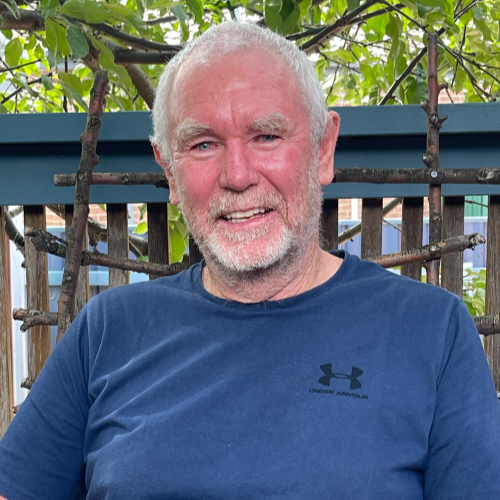
Regenerative over sustainable
Mark Spain is at the forefront of sustainability — or, more accurately, regenerative practice. From leading initiatives through his co-founded business, Global Learning, to serving on the boards of organisations like SEE Change, his work is shaping the way we think about sustainable leadership.
I had the pleasure of sitting down with him to talk about regenerative practice and how it can foster a new kind of work culture and leadership.
SEE Change: What does sustainability mean to you?
Mark: It's a bit of an ambiguous term because sustainability means you're just getting over the line — like if you said your relationship with your closest friend was sustainable, that's not really a high standard. Some economists see sustainable as being able to “keep doing damage in a repeated way”. Personally, the term I’d rather use is regenerative which is about making life thrive. It encourages life to grow, so that things can be abundant and richer for everybody.
I'm guessing you do a lot of volunteering in the environment and sustainability sector. What drove you to do this work?
I never really saw myself as a volunteer. I became interested in the environment through my work, and I felt that I needed to invest my skills and expertise into my community. My background is in leadership development — previously with corporations and government departments. Now I work more with land care, community groups and rural communities. I help people build nature-abundant landscapes that sustain communities and food systems and the people in those areas.
These days, I see my life as having one foot in “hospicing the death of the old economy” that's killing us all, and the other foot in “midwifing the birth of a new economy” through regenerative projects: local good systems, thriving communities, circular economies. Some of this is paid work, and others I gift my time to. I see all of it as action-and-learning projects — working in my community, learning, and growing alongside others while building regenerative systems.
Leadership and culture change came up a lot when I was reading about you. How does organisational culture impact the organization's ability to achieve its own goals?
It’s foundational — it’s the way we relate to each other, the quality of the relationships, and the way people work together, which is gold in any community organisation team. I first got into this work through taking people into the bush and doing experiential learning in nature. I learnt how to reflect on things that went wrong. Staying curious rather than judgmental — that's part of a culture. Rather than criticising people and belittling people, we should help people grow and learn when we're working together, building the conditions for all of us to share leadership roles — that's the sort of culture that I'm really interested in: helping organisations, government departments, and community groups.
But our mainstream culture is often very extractive and fear based. It's like a mafia gang. They don't even hide it anymore. When I was younger, they used to hide that stuff, but now, it's all out in the open for everyone to see.
There’s a much better way to go: by learning to create peace. It sounds pretty simple, but we can actually live with one another and in harmony with nature if we have the right culture and values. It’s like the trees in my garden — they aren't the dominating force in my ecosystem. The ants and the fungi collaborate with that tree to create rich soil and good food. They share their power and collaborate with each other. The way nature does things should be the way humans fit into doing that as well.
And we can learn how to do that and of course our ancient cultures knew how to do this. We all were closely connected to the Earth. Indigenous cultures have thousands of years of knowledge about living in this environment. Part of that is learning how to treat things in a sacred way — not in a religious sense, but as part of your spirituality, your culture, your relationships. That's the culture that I'd like to see, which goes along with sustainability and creating a new economy.
Were there any challenges that you've encountered when driving these initiatives forward, and what lessons you learned from those challenges?
I'm the oldest in my family — I've got three sisters — and I didn’t realise until much later how differently my first younger sister was treated compared to me. I was a boy, so just my gender alone meant that I had a whole lot of privileges that I was oblivious to. When she told me her story, I thought “Gee, that never happened to me.” She had to stand up for herself. My mother and father were lovely people, and I'm really grateful for the family I grew up in, but that was the first example of my privilege as a male.
And when I did more leadership work, I learned I also had privilege as a white male. If I’m facilitating a program or running something, I've got some power just because of that position. I need to be very careful about how I use that and I've often got into problems because I make assumptions about things and other people get triggered by my behaviour.
One of the first things I learnt was that I don't need to be defensive — I can apologise, I can explain myself or be curious and find out what triggered them. It could be something I might have said or done and so we can all learn from that.
I've learnt that I need to turn emotional moments — whether they’re mine or someone else’s — into learning opportunities. So that when we are together, we can learn to deal with these situations more comfortably because they show up every day in life. And some people just retreat as soon as that comes up. We need to create a condition where every voice that's in the room is honoured and respected and is part of contributing to something.
As a leader with power and privilege, you don’t have to do everything on your own. It’s more about working together as equal members of a team or community?
One of the problems with leadership in our mainstream culture is that it's seen as a position where someone takes charge and controls everything. That's an immature form of leadership because a leader doesn't have all the information. If they make decisions in isolation, things can go wrong.
Leaders need to learn the skills of listening to the people around them — a servant leader who sees themselves as part of an ecosystem rather than sitting above it. That means they have humility and like to see other people taking initiative and succeeding. This is a leadership that works in the background rather than loud and up front.
A big part of that is having moral courage and ethical foundation in this culture. People who don’t stand by their morals get rolled over so they often stay rigid and ineffective. But good leadership, like good science, is about being open to new evidence and willing to grow.
What advice would you give to someone who's starting a regenerative practise even if it's just at a personal level?
One of the things I'd say is that for me to give advice without knowing that person or having a relationship with them would not be good advice. It's not just a series of transferring knowledge, it's building a relationship. I would be very cautious of giving people advice. I would enquire with you with what you face as a challenge. The advice I'd be giving you would be helping you find within yourself.
The first thing would be strengthening the relationships that you've got. Learn how to be curious. When you feel like you're being judgemental and you're dismissing other people, stop yourself and say, “How can I be curious about this? Why am I judging this other person? Why am I writing them off? Why am I putting them in a box? And what can I learn from this about myself?”.
How do you encourage innovative thinking rooted in curiosity?
The way I started doing this was rather than talking and sitting like this, we would be doing an activity out on the grass in a team. There'll be a few of us and we'd solve a problem. Different people may have different ideas, and we all have to put them together. It can create conflict when people mess up and make a mistake. Instead of blaming each other, we ask: what can we learn from this? Where could we be more effective next time?
When everyone gets a chance to say their own idea and everyone is heard, then we agree on which idea we want to try or mix ideas together.
Creativity is the foundation of innovation. It means staying open, letting go of fixed ideas and seeing the system with new eyes, as a child would see it. So if you stay open and naïve, you'll create the conditions for innovation and creativity.
What would you see as the most important developments or challenges in leadership and regenerative practice over the next few years?
Staying grounded and grateful as that creates abundance and regeneration, compared to if I just went telling everybody about how upset I was. So I try stay grateful and recognise that there is terrible stuff happening and stay curious about the conditions that create it. That's how I want to show up in my leadership and community work.
If there's an opportunity to build or strengthen a relationship, I would always take it even if it was someone I didn't like or didn't value. There’s always something to learn in those moments.